
Complete Blood Count
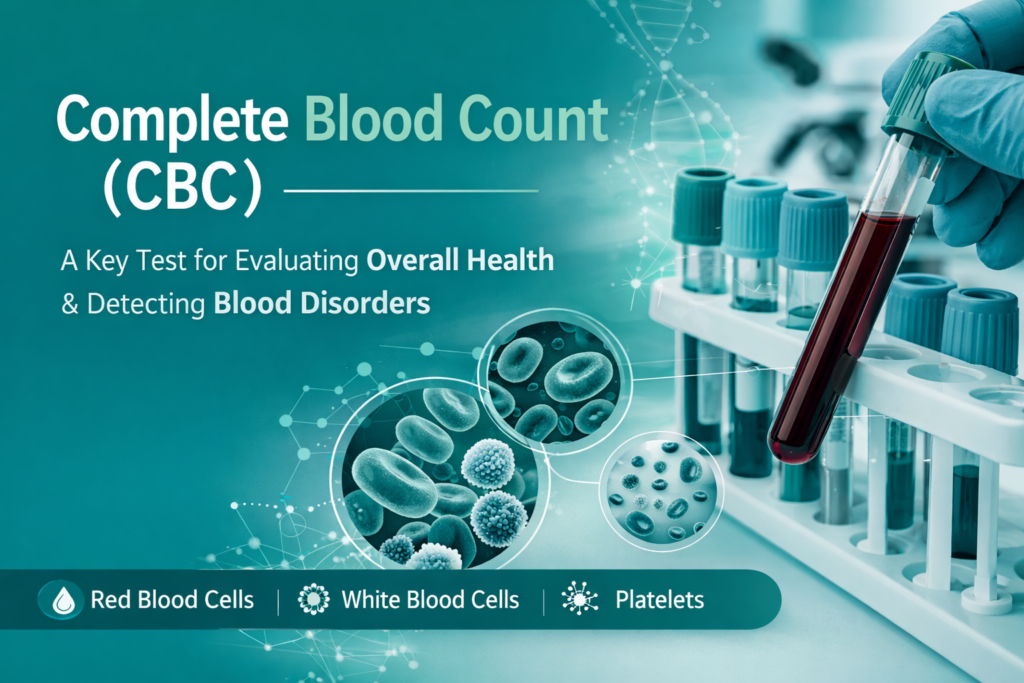
Table of Contents
Definition
The Complete Blood Count is a comprehensive panel that evaluates the three main cellular components of blood: erythrocytes (red blood cells), leukocytes (white blood cells), and thrombocytes (platelets).
While modern hematology analyzers provide results in seconds using flow cytometry and impedance technology, the expertise of the lab professional remains critical for identifying flags that require a manual peripheral blood film (PBF) review.
Clinical Significance
1. Erythrocyte (RBC) Disorders
The primary clinical significance of the RBC profile is the classification and diagnosis of Anemia and Polycythemia.
Microcytic Anemia (Low MCV):
Iron Deficiency Anemia (IDA): Characterized by low Hb, low MCV, and high RDW. The high RDW is a critical early marker distinguishing IDA from other microcytic conditions.
Thalassemia: Often presents with a significantly low MCV but a normal RDW and a relatively high RBC count for the level of anemia (Mentzer Index < 13).
Macrocytic Anemia (High MCV):
Megaloblastic: Resulting from Vitamin B12 or Folate deficiency. You will often see hypersegmented neutrophils on the peripheral smear.
Non-megaloblastic: Associated with chronic liver disease, alcoholism, or hypothyroidism.
Polycythemia: * Relative: Due to dehydration (decreased plasma volume).
Absolute (Polycythemia Vera): A myeloproliferative neoplasm where all three cell lines (RBC, WBC, Platelets) are often elevated.
2. Leukocyte (WBC) Dynamics
The WBC count and differential are the lab’s primary indicators of inflammation, infection, and hematologic malignancy.
Neutrophilia & The “Left Shift”:
An increase in absolute neutrophil count (ANC) usually indicates acute bacterial infection.
Clinical Pearl: A “Left Shift” (presence of band cells, metamyelocytes) combined with Toxic Granulation or Döhle bodies is a strong indicator of severe systemic inflammation or sepsis.
Lymphocytosis:
Typically indicates viral infections (e.g., Infectious Mononucleosis, CMV).
Atypical Lymphocytes: Large, reactive lymphocytes with “scalloped” edges around RBCs are diagnostic clues for viral pathologies.
Eosinophilia:
Clinically significant for Type I hypersensitivity (allergies), asthma, and parasitic infestations (especially helminths).
Leukopenia/Neutropenia:
Often seen in viral suppression, bone marrow failure (Aplastic Anemia), or as a side effect of chemotherapy. ANC < 500/µL represents a critical medical emergency due to infection risk.
3. Platelet and Hemostatic Significance
Platelets are essential for primary hemostasis. Their clinical significance extends to both count and morphology.
Critical Thrombocytopenia (<20 x 10⁹/L): * Significant risk for spontaneous intracranial or GI hemorrhage. Common causes include ITP, TTP, or sequestration in the spleen (Splenomegaly).
Thrombocytosis:
Reactive: Common in iron deficiency, post-surgery, or acute inflammation.
Essential Thrombocythemia: A primary bone marrow disorder with a persistent count >450 x 10⁹/L, posing a paradoxical risk of both thrombosis and bleeding.
Mean Platelet Volume (MPV): * A high MPV in the presence of thrombocytopenia suggests the marrow is successfully producing “young,” large platelets (destructive cause). A low MPV suggests a production problem in the marrow.
4. Critical Flag Interpretation (The “Lab-Clinic” Bridge)
When certain parameters hit “Critical Limits,” the lab professional must act immediately:
Pancytopenia: Simultaneous low RBC, WBC, and Platelets. This suggests bone marrow failure, acute leukemia, or severe B12 deficiency.
Blast Cells: The presence of even a single blast cell in a peripheral CBC differential is a critical finding that must be reported for immediate hematopathology review to rule out Acute Leukemia.
Schistocytes: Fragmented RBCs on a smear (noted when the analyzer flags “RBC fragments”) are indicative of MAHA (Microangiopathic Hemolytic Anemia), such as DIC or HUS—both are life-threatening
Components of CBC
To master the Complete Blood Count (CBC), one must understand that it is not a single test, but a symphony of parameters that describe the quantity, size, and health of blood cells. For the medical professional, these components are divided into three distinct “cell lines.”
1. The Erythroid Line (Red Blood Cells)
The primary function of the erythroid line is oxygen transport. These parameters help clinicians differentiate between various types of anemia and polycythemia.
Total RBC Count: The absolute number of erythrocytes per unit volume (10^12/L or millions/mu L).
Hemoglobin (Hb): Measured in g/dL, this is the protein molecule that carries oxygen. It is the most direct measure of the blood’s oxygen-carrying capacity.
Hematocrit (Hct) / Packed Cell Volume (PCV): The ratio of the volume of red cells to the total volume of blood.
Erythrocyte Indices (The “Gold Standards” for Anemia):
MCV (Mean Corpuscular Volume): Average size of a red cell (fL).
MCH (Mean Corpuscular Hemoglobin): Average weight of Hb in an individual cell (pg).
MCHC (Mean Corpuscular Hemoglobin Concentration): Concentration of Hb in a given volume of packed red cells (g/dL).
RDW (Red Cell Distribution Width): A measure of anisocytosis (variation in cell size). A high RDW indicates a “mixed” population of cells, often seen in early nutritional deficiencies.
2. The Leukocytic Line (White Blood Cells)
White blood cells (WBCs) are the core of the immune system. A CBC measures both the total quantity and the specific subtypes.
Total WBC Count (TLC): The total number of leukocytes per microliter of blood.
The Differential Count (DLC): This breaks down the WBCs into five primary types, reported as both percentages (%) and absolute counts (cells\mu L):
Neutrophils: The primary defense against bacterial infections.
Lymphocytes: Vital for viral defense and long-term immunity (B-cells and T-cells).
Monocytes: Large phagocytic cells that “clean up” debris and fight chronic infections.
Eosinophils: Increased in response to parasites and allergens.
Basophils: The rarest WBC, involved in immediate hypersensitivity and histamine release.
3. The Thrombocytic Line (Platelets)
Platelets are the smallest cellular components and are essential for blood clotting and wound healing.
Platelet Count: The total number of thrombocytes. A low count (Thrombocytopenia) poses a bleeding risk; a high count (Thrombocytosis) can lead to clotting issues.
MPV (Mean Platelet Volume): Similar to MCV for red cells, MPV measures the average size of platelets. Larger platelets are typically younger and more metabolically active.
PDW (Platelet Distribution Width): Indicates how uniform the platelets are in size. Increased PDW suggests platelet activation or bone marrow disorders.
4. Advanced “Non-Traditional” CBC Components
Modern automated hematology analyzers (like those using 5-part or 6-part differentials) often provide additional data points that are invaluable for clinical research:
Immature Granulocytes (IG): Presence of early-stage neutrophils (metamyelocytes, myelocytes); often a “flag” for sepsis or marrow stress.
Nucleated RBCs (NRBCs): RBCs that still have a nucleus. In adults, these should be zero. Their presence suggests severe bone marrow stress or extramedullary hematopoiesis.
Reticulocyte Count: The “young” RBCs. This is the most accurate way to assess if the bone marrow is responding appropriately to anemia.
Specimen Requirements
In the clinical laboratory, the accuracy of a Complete Blood Count (CBC) is determined long before the sample reaches the analyzer. The pre-analytical phase—which includes specimen collection, handling, and transport—is where nearly 70% of laboratory errors occur.
For lab professionals and students, mastering CBC specimen requirements is the first step in ensuring diagnostic integrity and preventing “garbage in, garbage out” results.
1. Primary Specimen Type: Whole Blood
The CBC requires undiluted whole blood. Unlike chemistry panels that utilize serum or plasma, hematology testing focuses on the cellular elements, which must remain in their natural, suspended state.
Preferred Specimen: Venous whole blood.
Alternative Specimen: Capillary blood (Skin puncture) may be used for pediatric patients or difficult draws, though it carries a higher risk of platelet clumping and interstitial fluid dilution.
2. The Gold Standard: EDTA Anticoagulation
The choice of anticoagulant is critical for maintaining cell morphology.
Anticoagulant: K2EDTA (Dipotassium Ethylenediaminetetraacetic acid) or K3EDTA.
Tube Color Code: Lavender/Purple Top Tube.
Mechanism of Action: EDTA works by chelating (binding) calcium ions in the blood, which effectively stops the coagulation cascade.
Why EDTA? It is the preferred anticoagulant for hematology because it preserves the size and shape of red blood cells and prevents platelet aggregation better than other additives.
3. The “Order of Draw” and Collection Volume
To maintain a high standard of E-E-A-T (Experience, Expertise, Authoritativeness, and Trustworthiness) in your lab practice, strict adherence to collection protocols is mandatory.
Proper Filling Technique:
Vacuum Fill: Allow the tube to fill until the vacuum is exhausted. Most standard lavender tubes require 2.0 mL to 4.0 mL of blood.
The “Fill to Volume” Rule: The ratio of blood to EDTA is vital.
Under-filling: Leads to excess EDTA concentration, causing RBC shrinkage and falsely decreasing the MCV and Hematocrit.
Over-filling: Can lead to micro-clot formation, which invalidates the platelet count and differential.
Mixing Requirements:
Immediately after collection, the tube must be gently inverted 8 to 10 times.
Warning: Never shake the tube. Shaking causes hemolysis (rupturing of RBCs), which falsely elevates potassium and interferes with hemoglobin/Hct measurements.
4. Stability and Storage Conditions
Time and temperature significantly impact the “freshness” of a hematology sample.
Room Temperature (18–25°C): Samples are generally stable for 6 to 8 hours. After this, WBC morphology begins to deteriorate, and platelets may degranulate.
Refrigerated (2–8°C): If testing is delayed, samples can be stored for up to 24 hours.
Note: Always allow the sample to return to room temperature and ensure it is well-mixed on a mechanical rocker before analysis.
Never Freeze: Freezing whole blood causes total hemolysis, making the specimen unacceptable for a CBC.
5. Criteria for Specimen Rejection
A professional medical laboratory must maintain strict rejection criteria to ensure patient safety. Specimens should be rejected if they exhibit:
Clotted Samples: Even a tiny micro-clot can trap platelets and WBCs, leading to falsely low counts.
Hemolysis: Noted by pink/red plasma after centrifugation; interferes with RBC and Hb indices.
Inadequate Labeling: Missing patient ID, date, or time of collection.
Wrong Container: Use of Heparin (Green) or Citrate (Blue) tubes for a CBC (Citrate may only be used as a secondary check for EDTA-induced pseudothrombocytopenia).
Checklist: Specimen Requirements Summary
| Parameter | Requirement |
| Primary Keyword | Complete Blood Count Specimen |
| Additive | K2 or K3 EDTA |
| Tube Color | Lavender / Purple |
| Inversions | 8–10 gentle inversions |
| Stability | 8 hours (RT) / 24 hours (Refrigerated) |
| Common Error | Under-filling and Hemolysis |
Methodology & Principle
In the modern clinical laboratory, the Complete Blood Count (CBC) has evolved from manual cell counting with a hemocytometer to sophisticated automated analysis. Understanding the physics behind these instruments—the Principle—and the standard operating procedures—the Methodology—is essential for troubleshooting and verifying results.
1. Principles of Automated CBC Analysis
Modern hematology analyzers primarily utilize three physical principles to count and size blood cells.
A. Electrical Impedance (The Coulter Principle)
This is the most common method for counting RBCs and Platelets.
The Principle: Cells are poor conductors of electricity. They are suspended in an electrically conductive diluent (electrolyte). As cells pass through a small aperture (opening) between two electrodes, they momentarily increase the electrical resistance (impedance).
The Result: * Each “pulse” represents one cell count.
The amplitude (height) of the pulse is proportional to the cell volume.
B. Optical Light Scatter (Flow Cytometry)
Used primarily for the WBC Differential.
The Principle: A single stream of cells passes through a laser beam. As the laser hits each cell, the light is scattered in multiple directions.
Forward Scatter (FSC): Measures light scattered at a small angle, indicating the size of the cell.
Side Scatter (SSC): Measures light scattered at a 90° angle, indicating the internal complexity (granularity or nuclear shape).
The Result: By plotting FSC vs. SSC, the analyzer creates a scattergram that separates neutrophils, lymphocytes, monocytes, eosinophils, and basophils.
C. Spectrophotometry (Hemoglobin Measurement)
The Principle: Red cells are lysed (ruptured) to release hemoglobin. A reagent (traditionally cyanide-based, now typically cyanide-free SLS) converts hemoglobin into a stable colored compound.
The Result: A light beam is passed through the solution at a specific wavelength (usually 540 nm). The amount of light absorbed is proportional to the concentration of hemoglobin (Beer-Lambert Law).
2. Methodology: Step-by-Step Lab Procedure
The methodology for a CBC involves precise steps to ensure the sample is representative and the instrument is calibrated.
Step 1: Pre-Analysis Preparation
Sample Integrity: Check the lavender-top tube for micro-clots using an applicator stick (if suspected).
Mixing: The sample must be placed on a mechanical roller or inverted manually at least 20 times if it has been sitting, to ensure the cells are in a uniform suspension.
Temperature: Ensure refrigerated samples have reached room temperature.
Step 2: Automated Analysis
Aspiration: The analyzer probe aspirates a precise micro-volume of the whole blood.
Dilution & Partitioning: The sample is split into two or more “baths”:
RBC/Platelet Bath: Highly diluted to prevent “coincidence” (two cells passing the aperture at once).
WBC/Hb Bath: A lyse agent is added to destroy RBCs so that WBCs can be counted and Hemoglobin can be measured without interference.
Data Processing: The analyzer’s software converts electrical and optical signals into numerical data and histograms.
Step 3: Post-Analysis Verification
Flag Review: If the analyzer detects an abnormality (e.g., “Blast flag” or “Platelet clumps”), the methodology dictates a Manual Peripheral Blood Smear (PBS) review.
The Manual Smear: * A drop of blood is spread on a glass slide, dried, and stained (Leishman or Wright stain).
The lab professional performs a “100-cell differential” under oil immersion (100x) to confirm the automated count.
Reference Ranges & Interpretations
1. Standard Reference Ranges for Adults
Below is a comprehensive table of standard reference intervals. Always refer to your specific laboratory’s SOP for local validated ranges.
| Parameter | Male Range | Female Range | Units |
| Hemoglobin (Hb) | 13.5 – 17.5 | 12.0 – 15.5 | g/dL |
| Hematocrit (Hct) | 41% – 50% | 36% – 44% | % |
| RBC Count | 4.5 – 5.9 | 4.1 – 5.1 | 10^12/L |
| WBC (Total) | 4.5 – 11.0 | 4.5 – 11.0 | 10^9/L |
| Platelets | 150 – 450 | 150 – 450 | 10^9/L |
| MCV | 80 – 100 | 80 – 100 | fL |
| MCH | 27 – 33 | 27 – 33 | pg |
| MCHC | 32 – 36 | 32 – 36 | g/dL |
| RDW | 11.5 – 14.5 | 11.5 – 14.5 | % |
2. Clinical Interpretation of Abnormal Results
Interpreting a CBC requires looking at the “big picture.” One abnormal value often explains another.
A. Red Cell Interpretation (Anemia & Polycythemia)
Low Hb + Low MCV: High probability of Microcytic Anemia. If RDW is high, suspect Iron Deficiency. If RDW is normal, consider Thalassemia Trait.
Low Hb + High MCV: Indicates Macrocytic Anemia. Most common causes are Vitamin B12 or Folate deficiency (Megaloblastic) or chronic liver disease.
High Hb + High RBC: Suggests Polycythemia. This could be primary (Polycythemia Vera) or secondary (chronic hypoxia, smoking, or dehydration).
B. White Blood Cell Interpretation (Leukocytosis & Leukopenia)
Neutrophilia (>7.5 x 10^9/L): Acute bacterial infections, myocardial infarction, or severe metabolic stress.
Lymphocytosis (>4.0 x 10^9/L): Acute viral infections (e.g., EBV/Mononucleosis), chronic intracellular bacterial infections (TB), or CLL in older adults.
Neutropenia (<1.5 x 10^9/L): High risk for infection. Often caused by chemotherapy, aplastic anemia, or severe sepsis (bone marrow exhaustion).
Eosinophilia (>0.5 x 10^9/L): Common in asthma, hay fever, and parasitic (helminth) infestations.
C. Platelet Interpretation (Thrombosis & Hemorrhage)
Thrombocytopenia (<150 x 10^9/L): Increased risk of bleeding. Clinical concern becomes critical below 20 x 10^9/L.
Thrombocytosis (>450 x 10^9/L): Can be reactive (to inflammation or iron deficiency) or primary (Essential Thrombocythemia).
3. Critical Values (The “Action” Limits)
As a medical lab professional, these values require immediate notification to the physician:
Hemoglobin: < 7.0 g/dL (Typically the threshold for blood transfusion).
WBC Count: < 2.0 or > 30.0 x 10^9/L.
Platelets: < 20.0 or > 1000.0 x 10^9/L.
4. Factors That “Mimic” Abnormal Results
Expert lab technologists must recognize pre-analytical interference:
High MCHC (>37 g/dL): Usually an error. Check for Lipemia (fatty blood), Icterus (high bilirubin), or Cold Agglutinins.
Pseudothrombocytopenia: A false low platelet count caused by platelets clumping in the EDTA tube. Solution: Redraw in a Blue Top (Sodium Citrate) tube and multiply the result by 1.1.
Spurious Macrocytosis: High glucose levels or high WBC counts can interfere with how the analyzer sizes red cells.
Quick Stats
| Feature | Details | Things You Need to Know |
| Test Type | Hematology Panel | A fundamental profile assessing three cellular lines: Erythroid (Oxygenation), Leukocytic (Immunity), and Thrombocytic (Hemostasis). |
| Sample Type | Whole Blood (Venous) | Collected in a Lavender/Purple Top (EDTA) tube. Unlike LFTs, the blood must remain un-clotted and un-centrifuged. |
| Fasting Required? | Not Required | Diet does not significantly impact cell counts, though heavy fatty meals can cause Lipemia, falsely elevating Hemoglobin/MCHC results. |
| Sample Integrity | Mixing & Volume | Tubes must be inverted 8–10 times immediately. Under-filling (<50%) leads to RBC shrinkage and false low MCV/Hct due to EDTA excess. |
| Turnaround Time | 10–20 Minutes | Analyzed via high-throughput Electrical Impedance and Flow Cytometry. Vital for identifying internal hemorrhage or sepsis. |
| Primary Metric | RBC Indices (MCV/RDW) | These calculated values are the “DNA” of anemia diagnosis, distinguishing between Iron Deficiency (High RDW) and Thalassemia (Normal RDW). |
| Clinical Purpose | Baseline Screening | Used to detect anemia, monitor chemotherapy/bone marrow suppression, and screen for acute or chronic leukemias. |
| Critical Values | Hb <7.0 g/dL or PLT <20k | These are “Panic Values” indicating a high risk for cardiac failure or spontaneous hemorrhage; require immediate physician notification. |
Strategic Considerations
1. Strategic Considerations for the Pathologist (The “Doctor”)
The Doctor focuses on Clinical Correlation and Diagnostic Risk. They need to know why the numbers matter for the patient’s prognosis.
Differential Diagnosis Logic: Don’t just provide data; provide pathways. For example, if the CBC shows a high MCV, the strategy should include a prompt to check for hypersegmented neutrophils to rule out Megaloblastic Anemia.
Malignancy Screening: The Pathologist’s primary strategic concern is missing a “Blast” cell. Content should emphasize the importance of Immature Granulocyte (IG) flags and when a manual review is non-negotiable for suspected Leukemia.
Integration with Other Panels: Strategically link the CBC to other results. A high WBC count (Infection) should be correlated with C-Reactive Protein (CRP) or Procalcitonin results to provide a full clinical picture.
2. Strategic Considerations for the Medical Lab Technologist
The Technologist is the “bridge” between the machine and the doctor. Their focus is Quality Assurance (QA) and Validation.
Histogram Analysis: A Technologist doesn’t just read numbers; they look at the RBC and WBC Histograms.
Strategic Content: Explain how a “left shift” on an RBC histogram indicates microcytosis, while a “bimodal peak” suggests a recent transfusion or cold agglutinin.
Interference Management: This is the Technologist’s biggest headache.
Strategic Content: Provide a “Troubleshooting Matrix” for high MCHC (>37 g/dL). Is it Lipemia? Icterus? Cold Agglutinins? Knowing how to perform a Saline Replacement or Warm the Sample is a high-value skill.
Delta Checks: Emphasize the strategy of comparing current results to the patient’s previous CBC. A sudden drop in Hemoglobin without a known bleed is a major red flag for sample misidentification.
3. Strategic Considerations for the Lab Technician
The Technician is on the “front line” of the Pre-Analytical phase. Their focus is Efficiency and Specimen Integrity.
The “Perfect Draw” Strategy: Focus on the mechanical aspects. The exact 1:9 or 1:4 ratio of anticoagulant to blood is vital.
Strategic Content: Explain the “Chemistry of Clots.” Even a microscopic clot can trap thousands of platelets, leading to a falsely low platelet count that causes unnecessary patient anxiety.
Order of Draw Optimization: Technicians must master the sequence of collection. Drawing a Lavender (EDTA) tube before a Red (Serum) or Blue (Citrate) tube can cause Potassium contamination and Calcium chelation, ruining multiple tests.
Storage & Transport Logistics: Address the “Time-to-Bench” strategy. If a CBC sits for more than 8 hours at room temperature, the WBCs start to degenerate. Technicians need clear “Stable vs. Rejected” criteria.
FAQs
Q1: What is the most common reason for a falsely low platelet count (Pseudothrombocytopenia)?
A: The most common cause is EDTA-induced platelet clumping. In some patients, the anticoagulant EDTA triggers platelets to adhere to each other or to neutrophils (platelet satellitism). If the analyzer flags “Platelet Clumps,” the lab professional should request a redraw in a Sodium Citrate (Blue Top) tube and multiply the result by 1.1 to account for the dilution.
Q2: Why is the RDW (Red Cell Distribution Width) important in anemia diagnosis?
A: RDW is a measure of anisocytosis (variation in cell size). It is the earliest indicator of nutritional deficiency. In Iron Deficiency Anemia, the RDW is typically high because the marrow produces increasingly smaller cells. In Thalassemia Trait, the RDW is usually normal because all cells are uniformly small from birth.
Q3: What does a “Left Shift” mean in a CBC report?
A: A “Left Shift” indicates an increased proportion of immature neutrophils (such as band cells, metamyelocytes, or myelocytes) in the peripheral blood. This clinically signifies that the bone marrow is reacting to an acute stimulus, most commonly a severe bacterial infection or systemic inflammation.
Q4: Can a CBC detect cancer or leukemia?
A: While a CBC cannot provide a definitive cancer diagnosis on its own, it is the primary screening tool for Hematologic Malignancies. Significant elevations in WBCs (Leukocytosis), the presence of Blast cells, or unexplained Pancytopenia (low counts across all three cell lines) are critical red flags that require a bone marrow biopsy and flow cytometry.
Q5: How does dehydration affect CBC results?
A: Dehydration leads to Hemoconcentration. Because the plasma volume (the liquid part of the blood) decreases, the concentration of cells appears higher. This often results in a falsely elevated Hemoglobin, Hematocrit, and RBC count, a condition known as Relative Polycythemia.
Q6: What is the “Rule of Three” in hematology?
A: The Rule of Three is a quality control tool used by lab techs to verify the validity of RBC parameters. It states:
RBC x 3 = Hb
Hb x 3 = Hct (+/- 3%)
If these correlations fail, the lab must investigate for instrument calibration errors, lipemia, or cold agglutinins.